Original, OEM or aftermarket: what the part in your phone actually is
Three words used loosely by half the repair trade. What each one means, what it changes for you, and the questions worth asking before you agree to a repair.
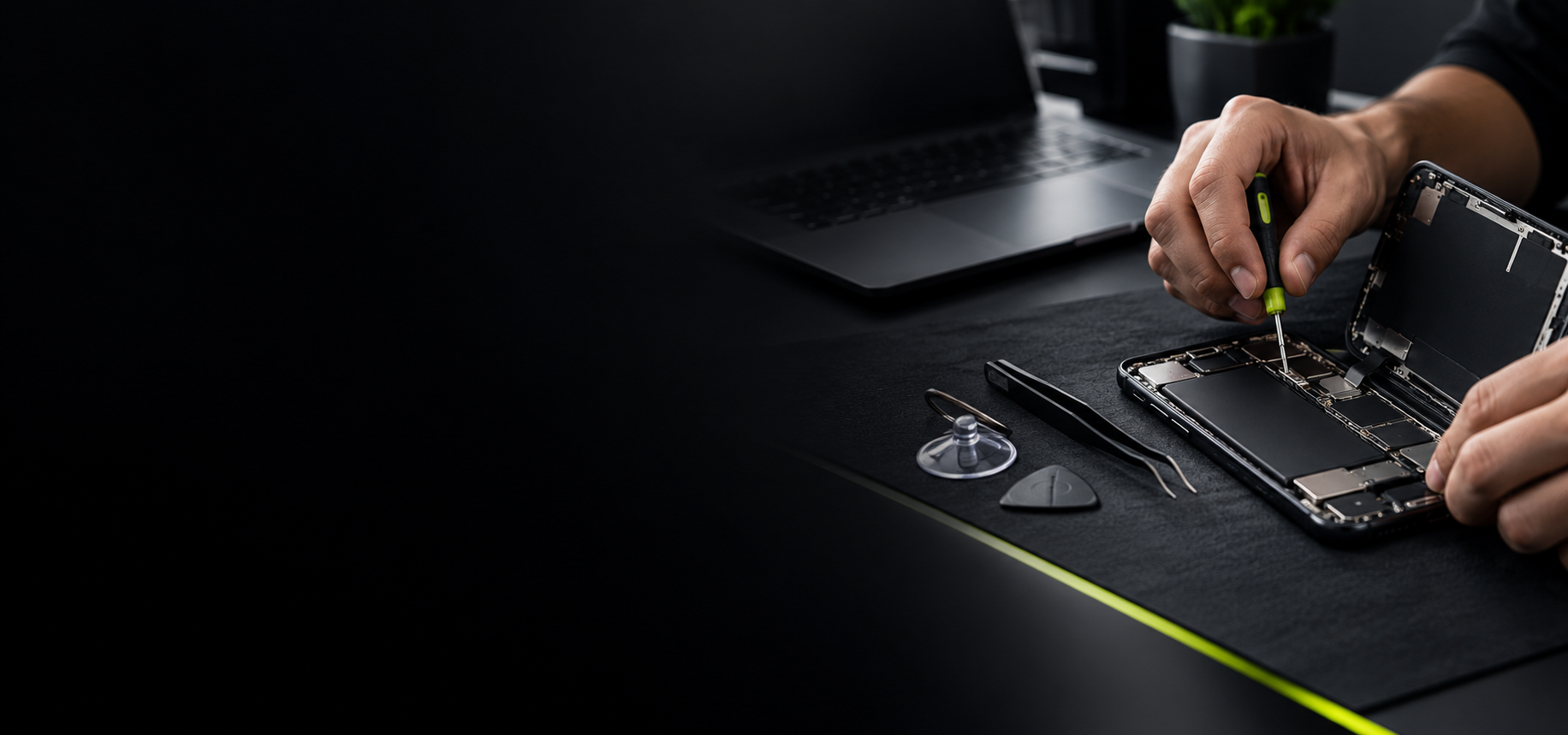
Three words get used almost interchangeably in this trade, and the difference between them is most of what you are paying for. They are worth ten minutes of your attention before you agree to a repair.
Original
The part the manufacturer puts in the device on the production line, obtained through their channel. It behaves exactly as the one being replaced, because it is the same part. It is also the most expensive, and for some devices it is simply not available to independent workshops at all.
OEM
Made by the same factory that produces the original, to the same specification, but sold outside the manufacturer's own channel. In practice an OEM screen is very close to original — the panel, the glass and the touch layer are the same production line. What it may lack is the manufacturer's serialisation, which matters on some recent phones.
Aftermarket
Made by a third party to fit. Quality varies enormously, from genuinely good to visibly poor, and the word tells you nothing on its own. A good aftermarket screen is a reasonable choice on an older device. A bad one is bright, cold, slow to the touch and dim at an angle.
What actually changes for you
- Colour and brightness. The easiest difference to see, side by side, and the hardest to un-see afterwards
- Touch response. Good panels track a finger precisely; poor ones lag at the edges
- Battery life. A less efficient panel draws more power, and you notice that by evening
- True Tone and auto-brightness. Features that depend on a calibrated sensor may not survive a non-original screen
- Warning messages. Some phones display a notice about an unrecognised part regardless of its quality
There is no single right answer. There is a right answer for your device, your budget and how long you plan to keep it — and you should be told which one you are getting.
Questions worth asking any workshop
- Which of the three am I getting, in that word?
- What is the warranty on the part, and what voids it?
- Will any feature stop working after this repair?
- If I am unhappy with the screen quality, what happens?
A workshop that answers those four plainly is one you can deal with. A workshop that calls everything "original" is one to be careful with.
We tell you which grade a quote is for before the work starts, and we will show you the difference on a working device if you want to see it. See what we repair or book a repair.
Related articles
Repair or replace? A rule that answers it in five minutes
A device is worth repairing when the repair costs less than what the device is still worth to you. Here is how to work both numbers out before you decide.
Your laptop is hot and loud: what the fan is telling you
A fan at full speed is a symptom, not a fault. Here is how to read it — and the one piece of maintenance that fixes most cases.
What to do in the first ten minutes after water damage
What happens in the first ten minutes decides whether a soaked phone is a clean-up or a board replacement. Do not turn it on to check. Corrosion needs water and current. Take the current away and you…