Repair or replace? A rule that answers it in five minutes
A device is worth repairing when the repair costs less than what the device is still worth to you. Here is how to work both numbers out before you decide.
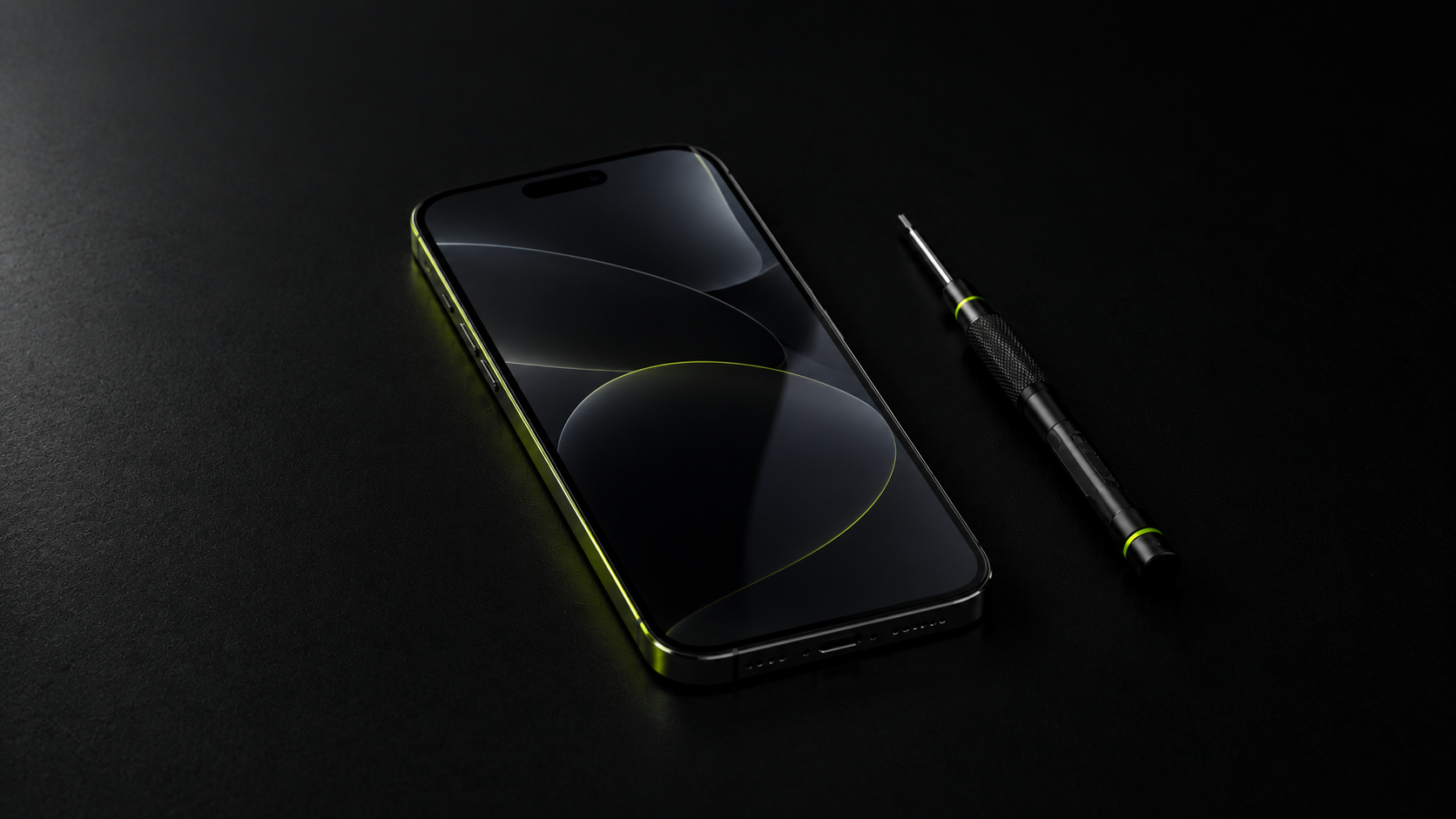
Every week somebody puts a phone on the counter and asks whether it is worth fixing. It is a fair question, and it has an answer that does not depend on how attached you are to the device. It depends on two numbers.
Number one: what the device is still worth to you
Not what it cost. What it would cost to replace it with something you would be equally happy using. For a four-year-old phone that still does everything you ask of it, that number is the price of a new mid-range handset, not the price of the flagship you bought in 2022.
Be honest about the second-hand market too. A working device you no longer want is worth something; a broken one is worth very little. The gap between those two is part of what a repair buys you.
Number two: what the repair actually costs
Quoted, not guessed. A quote means somebody has opened the device, or at least tested it, and knows which part is failing. Guessing from a photograph is how a 30 JOD job turns into a 90 JOD job halfway through.
Ask three things when you get the quote: which part is being replaced, what the warranty on that part is, and whether anything else was found while testing.
The rule
If the repair costs less than half of what you would pay to replace the device, repair it. Above half, think hard. Above two thirds, replace it.
That is deliberately blunt, and it is right far more often than it is wrong. What follows are the cases where it needs adjusting.
When repairing almost always wins
- A battery that no longer lasts the day, in a device that is otherwise fine
- Cracked glass with a perfect picture underneath
- A charging port that has worn out or filled with pocket lint
- A laptop that is slow because it still has a spinning hard drive
- A keyboard with a few dead keys
All five are cheap parts and bounded work. None of them tells you anything about the health of the rest of the device.
When replacing is the honest answer
- Liquid damage that has already been left to dry out for weeks — the corrosion keeps spreading
- A phone that has had three unrelated faults in a year, because the fourth is coming
- A device that no longer receives security updates and holds your bank apps
We will tell you when a device is in one of those three groups. Talking somebody into a repair that will not last is a bad way to run a workshop.
Bring the device in and we will quote it properly, including anything we find while testing. Book a repair and you will have the numbers before any work starts.
Related articles

Your laptop is hot and loud: what the fan is telling you
A fan at full speed is a symptom, not a fault. Here is how to read it — and the one piece of maintenance that fixes most cases.
What to do in the first ten minutes after water damage
What happens in the first ten minutes decides whether a soaked phone is a clean-up or a board replacement. Do not turn it on to check. Corrosion needs water and current. Take the current away and you…
Charging slowly? Check these four things before buying a battery
Slow charging is more often the cable, the port or the adapter than the battery. Four checks, in the order worth doing them.